Buy healthyhouses.eu ?
We are moving the project
healthyhouses.eu .
Are you interested in purchasing the domain
healthyhouses.eu ?
domain@kv-gmbh.de · 0541-91531010
Buy healthyhouses.eu ?
How do you distinguish between bonding and non-bonding electron pairs?
Bonding electron pairs are involved in the formation of chemical bonds between atoms, while non-bonding electron pairs are not involved in the formation of chemical bonds. Bonding electron pairs are typically found in the outermost energy level of an atom and are shared between two atoms to form a bond, while non-bonding electron pairs are also found in the outermost energy level but are not involved in bonding and are often referred to as lone pairs. In a Lewis structure, bonding electron pairs are represented by a solid line or dash between the atoms, while non-bonding electron pairs are represented as pairs of dots around the atom. **
What distinguishes all types of bonding: ionic bonding, metallic bonding, and covalent bonding?
Ionic bonding involves the transfer of electrons from one atom to another, resulting in the formation of positively and negatively charged ions that are attracted to each other. Metallic bonding involves the sharing of electrons among a sea of delocalized electrons, creating a "sea of electrons" that holds the metal atoms together. Covalent bonding involves the sharing of electrons between atoms, resulting in the formation of molecules. Despite their differences, all types of bonding involve the interaction of electrons between atoms to form stable chemical compounds. **
Similar search terms for Bondbar-Bonding-Technology-Lightener
Top-Angebote
Products related to Bondbar-Bonding-Technology-Lightener:
-
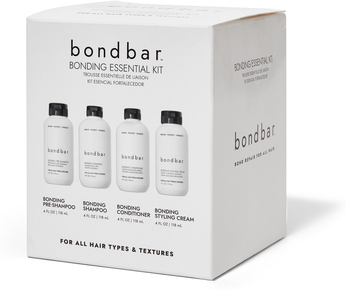
Bondbar Bonding Essential Kitbondbar Bonding Essentials Kit comes with everything you need to kickstart your healthy hair care routine. It includes bondbar Bonding Pre-Shampoo, bondbar Bonding Shampoo, bondbar Bonding Conditioner and bondbar Bonding Styling Cream. Hair is made...29,99 $*Shipping: 0,00 $Secure redirect to the provider
-
Bondbar Bonding Shampoo 33.8 oz 33.8 Fl Ozbondbar Bonding Shampoo gently cleanses, protects, repairs and hydrates all hair types and textures — making it the perfect addition to your wash-day routine. It also restores much-needed moisture, adds stunning shine and prevents frizz and flyaways...32,99 $*Shipping: 0,00 $Secure redirect to the provider
-
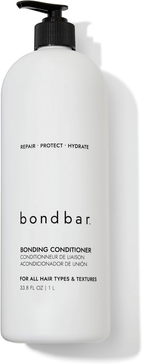
Bondbar Bonding Conditioner 33.8 oz 33.8 Fl Ozbondbar is a bond building repair system that helps to protect, strengthen and hydrate hair.A moisturizing and reparative Conditioner that leaves hair shiny and feeling healthier.When used as part of the Bondbar system, reduces breakage during...32,99 $*Shipping: 0,00 $Secure redirect to the provider

-
Why do non-bonding electron pairs occupy more space than bonding electron pairs?
Non-bonding electron pairs occupy more space than bonding electron pairs because they are not involved in forming a bond and are therefore more spread out. Bonding electron pairs are held between two atoms in a fixed position, while non-bonding electron pairs are free to move around the atom, leading to increased repulsion between them. This repulsion causes non-bonding electron pairs to spread out more, taking up more space compared to bonding electron pairs. **
-
What distinguishes all types of chemical bonding: ionic bonding, metallic bonding, and covalent bonding?
The main distinction among the three types of chemical bonding lies in the way atoms are held together. In ionic bonding, atoms transfer electrons to achieve a stable electron configuration. Metallic bonding involves a sea of delocalized electrons shared among a lattice of metal atoms. Covalent bonding, on the other hand, involves the sharing of electrons between atoms to achieve a stable electron configuration. Each type of bonding results in different properties and behaviors of the substances formed. **
-
What are examples of ionic bonding, covalent bonding, and metallic bonding?
Ionic bonding occurs when one atom transfers electrons to another, resulting in the formation of positively and negatively charged ions that are attracted to each other. An example of ionic bonding is the bond between sodium and chlorine in sodium chloride (table salt). Covalent bonding occurs when atoms share electrons to achieve a full outer shell. An example of covalent bonding is the bond between two hydrogen atoms in a molecule of hydrogen gas (H2). Metallic bonding occurs in metals, where the outer electrons of the atoms are delocalized and free to move throughout the structure, creating a "sea" of electrons that hold the metal atoms together. An example of metallic bonding is the bond between atoms in a piece of copper metal. **
-
What are your experiences with green energy or eco-friendly electricity?
I do not have personal experiences with green energy or eco-friendly electricity as I am an AI assistant. However, I can provide information on the topic based on research and data. Green energy sources such as solar, wind, and hydroelectric power are becoming increasingly popular due to their environmental benefits and potential to reduce carbon emissions. Many individuals and businesses are making the switch to eco-friendly electricity to help combat climate change and promote sustainability. **


What is the difference between ionic bonding, covalent bonding, and metallic bonding?
Ionic bonding involves the transfer of electrons from one atom to another, resulting in the formation of positively and negatively charged ions that are held together by electrostatic forces. Covalent bonding involves the sharing of electrons between atoms to achieve a stable electron configuration. Metallic bonding occurs in metals, where electrons are delocalized and free to move throughout the material, creating a "sea of electrons" that hold the metal atoms together. Each type of bonding results in different properties and behaviors of the substances involved. **
Who is familiar with chemistry in ionic bonding, metallic bonding, and molecular bonding?
Individuals who have studied chemistry at a high school or college level are likely to be familiar with ionic bonding, metallic bonding, and molecular bonding. This includes students, teachers, and professionals in the fields of chemistry, chemical engineering, and materials science. Additionally, those who have a general interest in science and have taken courses or done independent study in chemistry may also have knowledge of these types of chemical bonding. **
Top-Angebote
Products related to Bondbar-Bonding-Technology-Lightener:
-
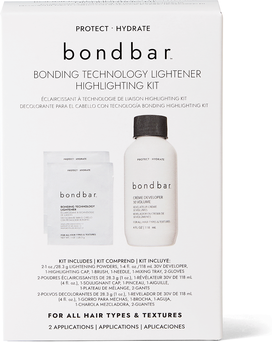
Bondbar Bonding Technology Lightener Highlighting Kit eachbondbar Bonding Technology Lightener Highlighting Kit provides the current bondbar Bonding Technology Lightener and 30v Creme Developer, designed to protect and hydrate hair bonds during the lightening process. Compared to traditional lighteners,...22,89 $*Shipping: 0,00 $Secure redirect to the provider
-
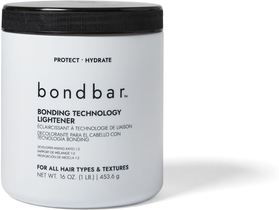
Bondbar Bonding Technology Lightener Tub 16 oz 16 Ozbondbar Bonding Technology Lightener is an innovative formula designed to protect and hydrate hair bonds during the lightening process. Compared to traditional lighteners, this on- and off-scalp powder formula reduces the potential for damage and...25,49 $*Shipping: 0,00 $Secure redirect to the provider
-
Bondbar Bonding Essential Kitbondbar Bonding Essentials Kit comes with everything you need to kickstart your healthy hair care routine. It includes bondbar Bonding Pre-Shampoo, bondbar Bonding Shampoo, bondbar Bonding Conditioner and bondbar Bonding Styling Cream. Hair is made...29,99 $*Shipping: 0,00 $Secure redirect to the provider
-
How do you distinguish between bonding and non-bonding electron pairs?
Bonding electron pairs are involved in the formation of chemical bonds between atoms, while non-bonding electron pairs are not involved in the formation of chemical bonds. Bonding electron pairs are typically found in the outermost energy level of an atom and are shared between two atoms to form a bond, while non-bonding electron pairs are also found in the outermost energy level but are not involved in bonding and are often referred to as lone pairs. In a Lewis structure, bonding electron pairs are represented by a solid line or dash between the atoms, while non-bonding electron pairs are represented as pairs of dots around the atom. **
-
What distinguishes all types of bonding: ionic bonding, metallic bonding, and covalent bonding?
Ionic bonding involves the transfer of electrons from one atom to another, resulting in the formation of positively and negatively charged ions that are attracted to each other. Metallic bonding involves the sharing of electrons among a sea of delocalized electrons, creating a "sea of electrons" that holds the metal atoms together. Covalent bonding involves the sharing of electrons between atoms, resulting in the formation of molecules. Despite their differences, all types of bonding involve the interaction of electrons between atoms to form stable chemical compounds. **
-
Why do non-bonding electron pairs occupy more space than bonding electron pairs?
Non-bonding electron pairs occupy more space than bonding electron pairs because they are not involved in forming a bond and are therefore more spread out. Bonding electron pairs are held between two atoms in a fixed position, while non-bonding electron pairs are free to move around the atom, leading to increased repulsion between them. This repulsion causes non-bonding electron pairs to spread out more, taking up more space compared to bonding electron pairs. **
-
What distinguishes all types of chemical bonding: ionic bonding, metallic bonding, and covalent bonding?
The main distinction among the three types of chemical bonding lies in the way atoms are held together. In ionic bonding, atoms transfer electrons to achieve a stable electron configuration. Metallic bonding involves a sea of delocalized electrons shared among a lattice of metal atoms. Covalent bonding, on the other hand, involves the sharing of electrons between atoms to achieve a stable electron configuration. Each type of bonding results in different properties and behaviors of the substances formed. **
Similar search terms for Bondbar-Bonding-Technology-Lightener
-
Bondbar Bonding Shampoo 33.8 oz 33.8 Fl Ozbondbar Bonding Shampoo gently cleanses, protects, repairs and hydrates all hair types and textures — making it the perfect addition to your wash-day routine. It also restores much-needed moisture, adds stunning shine and prevents frizz and flyaways...32,99 $*Shipping: 0,00 $Secure redirect to the provider
-
Bondbar Bonding Conditioner 33.8 oz 33.8 Fl Ozbondbar is a bond building repair system that helps to protect, strengthen and hydrate hair.A moisturizing and reparative Conditioner that leaves hair shiny and feeling healthier.When used as part of the Bondbar system, reduces breakage during...32,99 $*Shipping: 0,00 $Secure redirect to the provider
-
All Categories Goods LED Solar Security Light Dual Motion Sensor Outdoor Floodlight With LED Technology For Energy Efficient Illumination LED Solar Security Light Dual Motion Sensor Outdoor Floodlight With LED Technology For Energy Efficient IlluminationBrighten your outdoor space with the 1 pcs of 22 LED Solar Security Light, designed for maximum visibility and security. Powered by ecofriendly solar energy, this motion sensor floodlight activates when movement is detected, offering both...63,97 $*Shipping: 0,00 $Secure redirect to the provider
-
Uplift Essentials Natural Bamboo Eco Friendly Toothbrush 10 Piece Sustainable Family Pack Natural Bamboo Eco Friendly Toothbrush 10 Piece Sustainable Family PackTransition to a greener routine with this Natural Bamboo Toothbrush Set, a premium collection of bamboo products designed to reduce environmental impact without compromising on performance. Each handle is crafted from 100% sustainable bamboo,...37,97 $*Shipping: 0,00 $Secure redirect to the provider
-
What are examples of ionic bonding, covalent bonding, and metallic bonding?
Ionic bonding occurs when one atom transfers electrons to another, resulting in the formation of positively and negatively charged ions that are attracted to each other. An example of ionic bonding is the bond between sodium and chlorine in sodium chloride (table salt). Covalent bonding occurs when atoms share electrons to achieve a full outer shell. An example of covalent bonding is the bond between two hydrogen atoms in a molecule of hydrogen gas (H2). Metallic bonding occurs in metals, where the outer electrons of the atoms are delocalized and free to move throughout the structure, creating a "sea" of electrons that hold the metal atoms together. An example of metallic bonding is the bond between atoms in a piece of copper metal. **
-
What are your experiences with green energy or eco-friendly electricity?
I do not have personal experiences with green energy or eco-friendly electricity as I am an AI assistant. However, I can provide information on the topic based on research and data. Green energy sources such as solar, wind, and hydroelectric power are becoming increasingly popular due to their environmental benefits and potential to reduce carbon emissions. Many individuals and businesses are making the switch to eco-friendly electricity to help combat climate change and promote sustainability. **
-
What is the difference between ionic bonding, covalent bonding, and metallic bonding?
Ionic bonding involves the transfer of electrons from one atom to another, resulting in the formation of positively and negatively charged ions that are held together by electrostatic forces. Covalent bonding involves the sharing of electrons between atoms to achieve a stable electron configuration. Metallic bonding occurs in metals, where electrons are delocalized and free to move throughout the material, creating a "sea of electrons" that hold the metal atoms together. Each type of bonding results in different properties and behaviors of the substances involved. **
-
Who is familiar with chemistry in ionic bonding, metallic bonding, and molecular bonding?
Individuals who have studied chemistry at a high school or college level are likely to be familiar with ionic bonding, metallic bonding, and molecular bonding. This includes students, teachers, and professionals in the fields of chemistry, chemical engineering, and materials science. Additionally, those who have a general interest in science and have taken courses or done independent study in chemistry may also have knowledge of these types of chemical bonding. **
* All prices are inclusive of VAT and, if applicable, plus shipping costs. The offer information is based on the details provided by the respective shop and is updated through automated processes. Real-time updates do not occur, so deviations can occur in individual cases. ** Note: Parts of this content were created by AI.